The project was initiated with the objective of expanding the company’s cloud portfolio by introducing a Hosted Private Cloud solution integrated into the CMP (Cloud Management Platform). Following the Metal Cloud Infrastructure – configurable but with limited scalability and self-managed operations – the goal was to offer a dedicated, dynamically scalable, and fully managed infrastructure capable of attracting large enterprises and advanced PMIs.The competitive landscape included major players such as Amazon Web Services, Microsoft Azure, and Google Cloud Platform. The challenge was not to replicate their complexity, but to build a distinctive alternative by emphasizing data sovereignty, Italian-language support, and strong vertical expertise, with a solid positioning in the VMware ecosystem.The objective went beyond designing an interface: it aimed to make enterprise-level complexity understandable and convertible within the CMP funnel.
🪜 The first steps
We initiated a market research phase focused on cloud configurators, pricing models, and value communication. The analysis showed that major providers offer extreme flexibility but often rely on complex user journeys and lack pricing transparency in the early stages.
In parallel, the CMP funnel was analyzed to identify potential friction points, particularly in the transition between configuration and checkout.
Key insight: differentiation lies not only in features, but in the quality of the decision-making experience.
👩 Role
UI/UX Designer
- Setup experiment
- Visual and interaction design
- Development collaboration
🤝Stakeholders
- Business owner
- Managers
- Department chief
🖋️ Design Approach
The design approach was based on three principles: progressivity, transparency, and consistency.
The configuration process was divided into logical steps to reduce cognitive load and guide users through decision-making. Microcopy and tooltips made the configurator more consultative, preserving technical depth without becoming overwhelming.
Integration with the cart required a redesign of technical summarization: hierarchical information, visual separation between components, and the inclusion of reassurance elements. The objective was to reduce friction in the final stage of the funnel.
From the outset, a tracking framework focused on conversion, engagement, and close rate was defined.
📚 Learnings
The project highlighted that, in enterprise contexts, trust precedes configuration. Pricing transparency and clarity between “managed” and “self-managed” solutions directly influence perceived reliability.
The most critical touchpoints proved to be entry into the configurator, price visualization, and transition to checkout. Linking these moments to business KPIs made it possible to transform design decisions into measurable strategic levers.
🚀 Implementation
After release, the project was monitored through:
- Funnel analysis in Google Analytics to track conversions
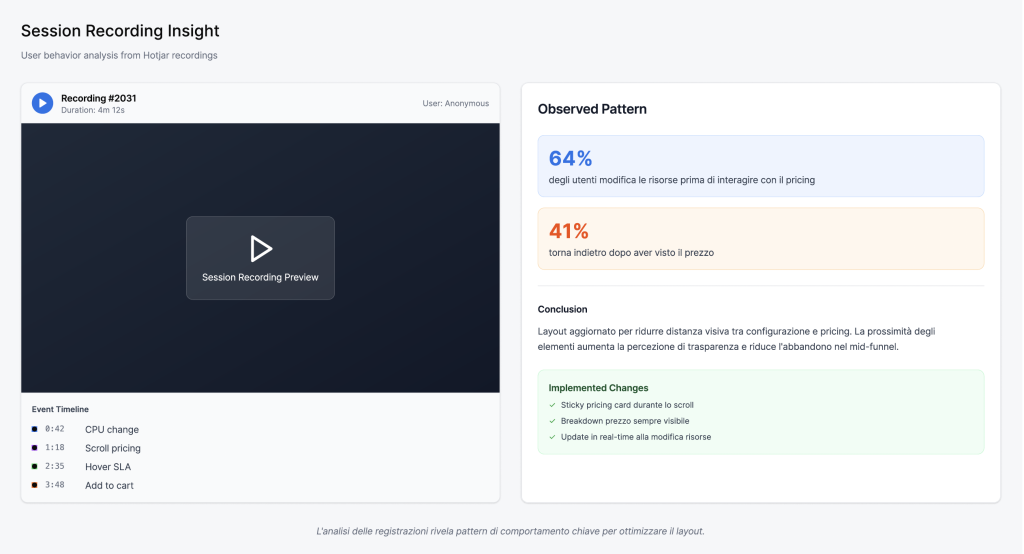
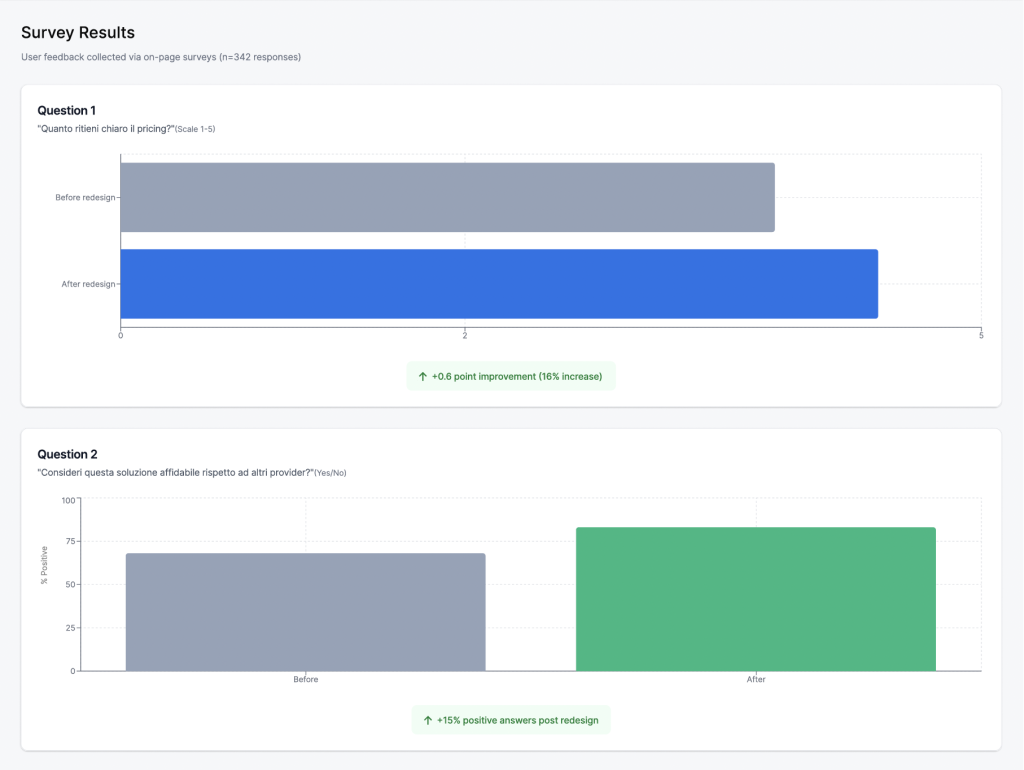
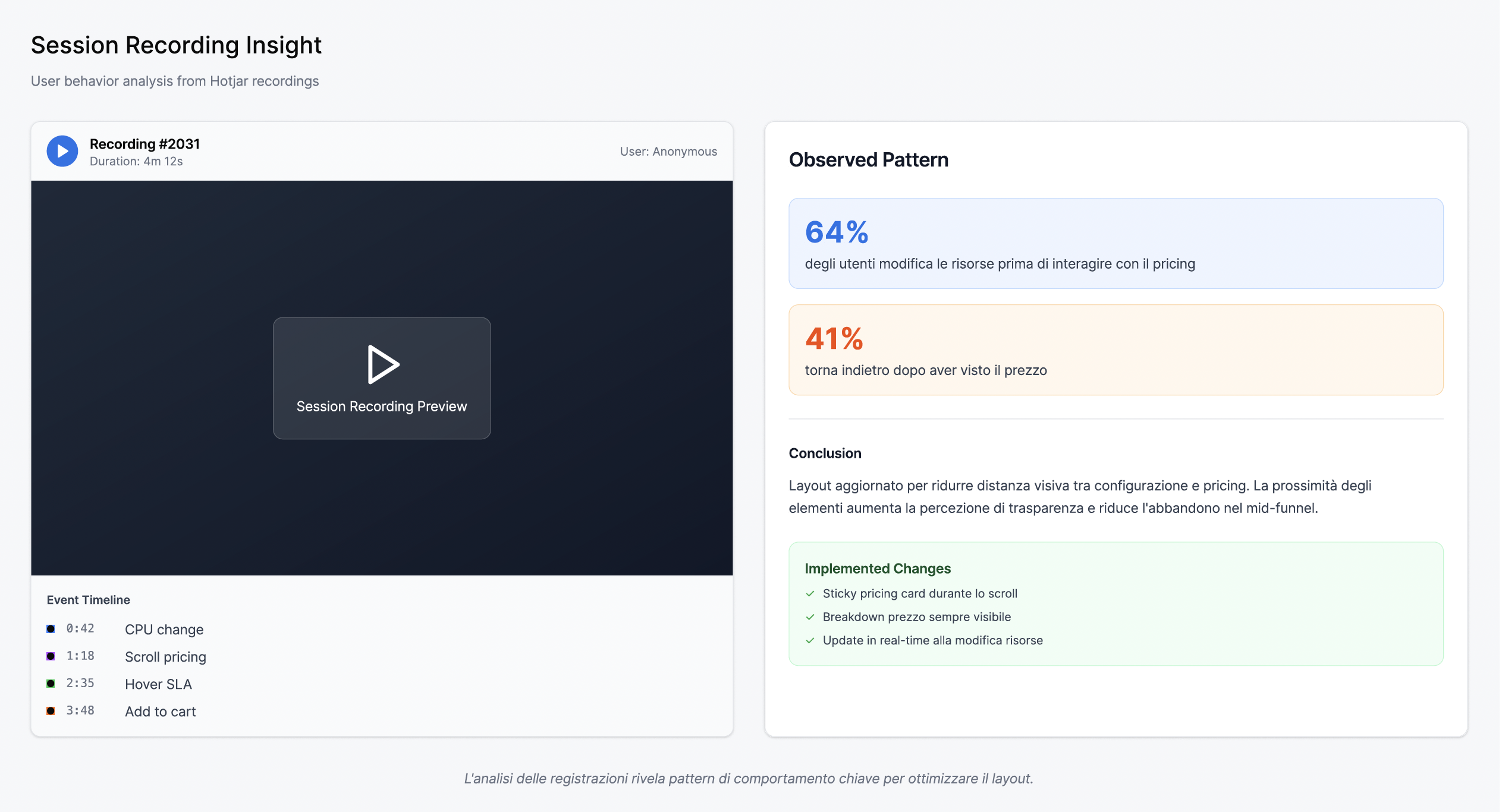
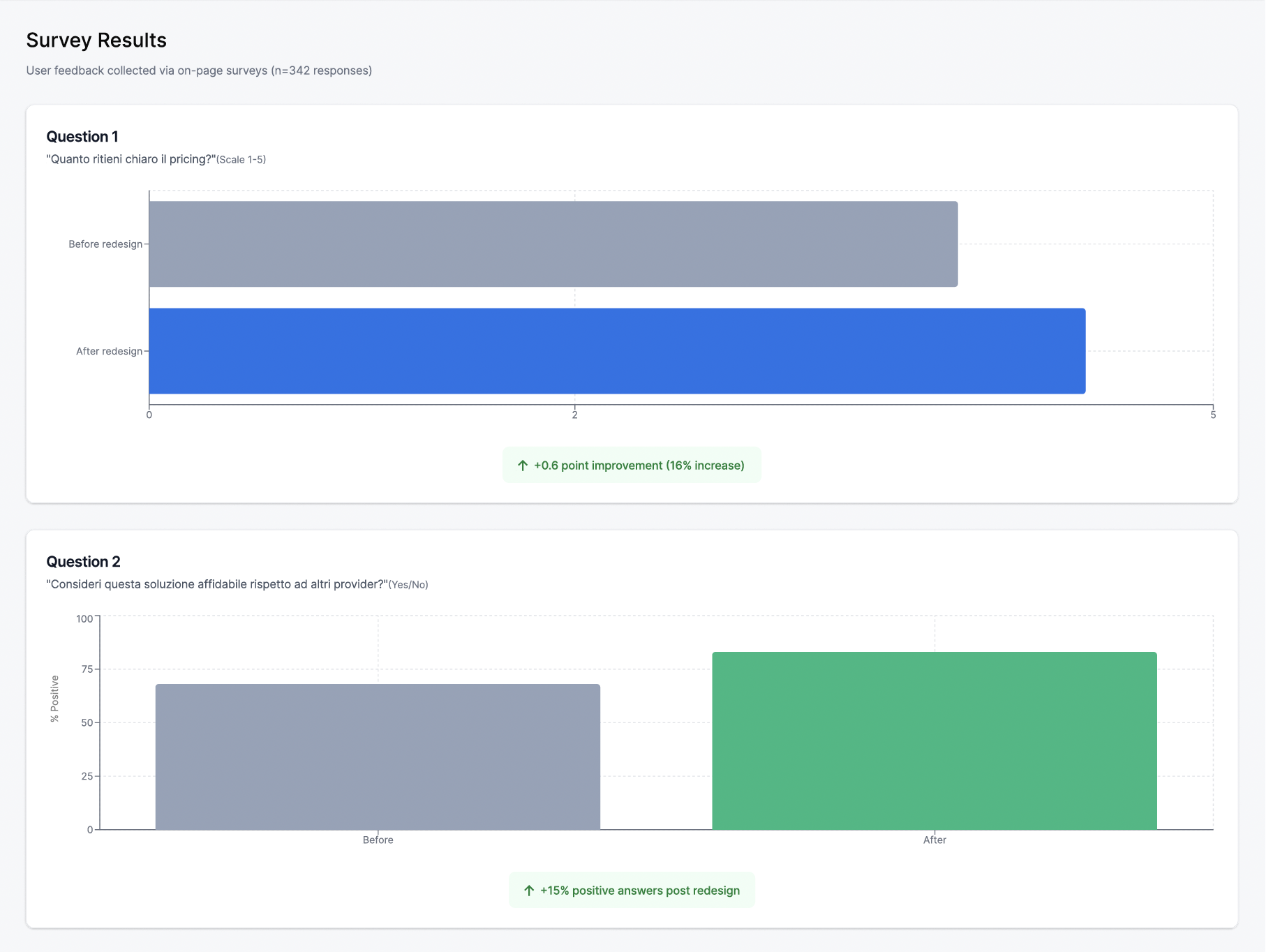
- Qualitative surveys and session analysis with Hotjar to measure perception and differentiation
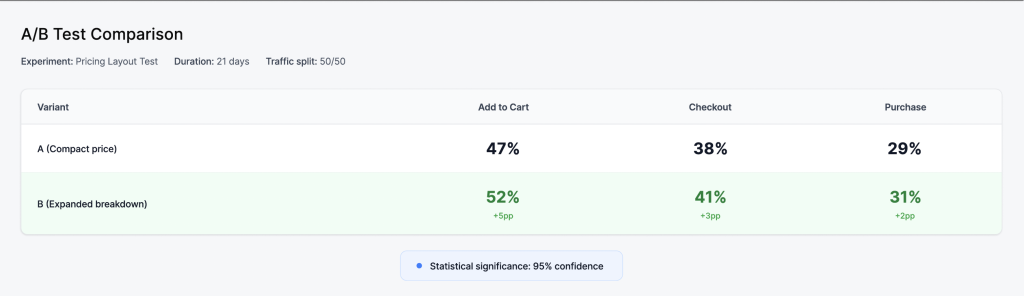
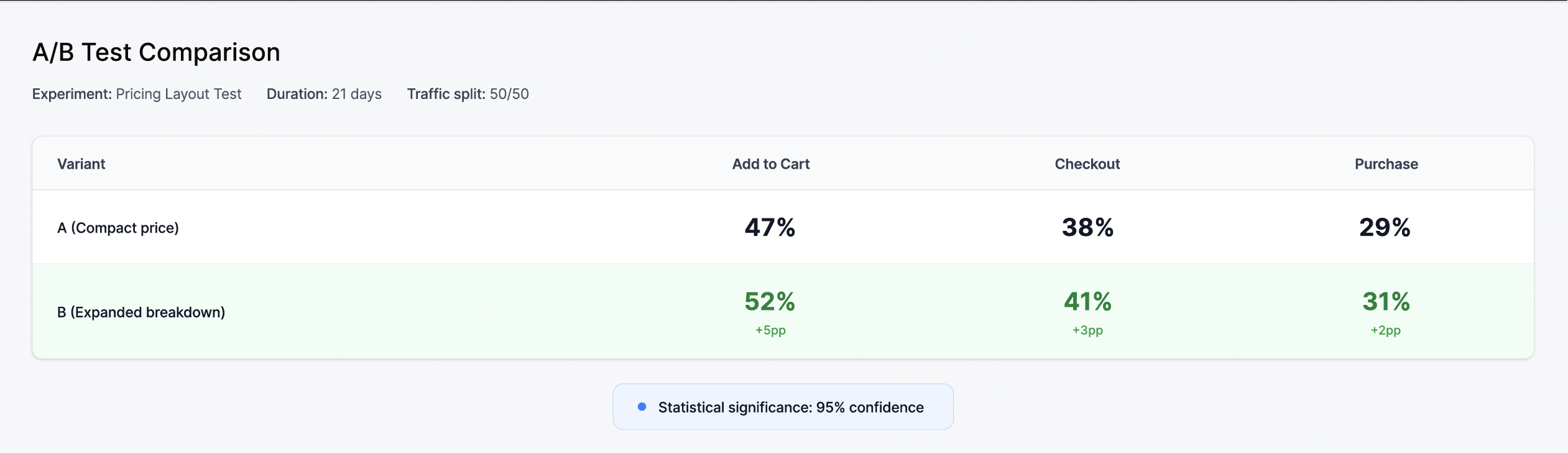
- Journey analysis and A/B testing to optimize close rate within the CMP
Continuous monitoring enabled targeted iterations on microcopy, information hierarchy, and CTAs, consolidating the effectiveness of the user journey.
💡 Impact in Numbers
In the first three months after launch:
- +18% increase in conversion rate from configuration to checkout
- –12% reduction in drop-off at the final funnel step
- +22% increase in interactions with the pricing breakdown
- +15% improvement in perceived “transparency and reliability” from qualitative surveys.
🎉 Conclusion
These results confirmed that transparency and structured management of complexity are tangible business drivers, not merely aesthetic choices.